
Key takeaways
- Find the best wood pergolas with privacy screens: cedar pergolas with built-in privacy panels, bar shelves and corner layouts for patios and backyards.
What's inside
As an Amazon Associate I earn from qualifying purchases. This post may contain affiliate links at no extra cost to you.
A wood pergola changes how a patio feels. It adds shade, structure and a clear place to gather, and when the frame includes a privacy screen it also blocks the view from a neighbor’s window or a busy street. The best wood pergolas with privacy screens combine a sturdy timber frame with a screen that is part of the structure, not an add-on hung after assembly.
Cedar is the wood most often used for these kits. It resists rot and insects without chemical treatment, it holds its shape outdoors, and it ages to a soft silver gray if left unstained. The two pergolas below are both cedar kits with a privacy screen stated on the listing, and both are sold on Amazon US. One is a corner cabana with bamboo privacy panels; the other is a grill gazebo with a privacy screen and large bar shelves for cooking areas.
Before buying, measure the space, check what the screen actually covers, and confirm how the frame anchors to the ground. The sections below walk through each of those decisions, then look at the two picks in detail.
Top pick: the Backyard Discovery Verona 12 x 8 Cedar Wood Cabana Corner Pergola, a corner layout with bamboo privacy panels that fits neatly into a patio corner. Runner-up: the Sunjoy Wooden Grill Gazebo, a 10 ft x 11 ft cedar frame pergola with a privacy screen and large bar shelves for grilling areas.
Quick Picks
As an Amazon Associate, we earn from qualifying purchases.
| Product | Best for | Frame | Privacy screen |
|---|---|---|---|
| Backyard Discovery Verona 12 x 8 Cedar Wood Cabana Corner Pergola | Corner patios and small yards | Cedar wood | Bamboo privacy panels |
| Sunjoy Wooden Grill Gazebo 10 ft x 11 ft Cedar Frame BBQ Pergola | Grill stations and hot tub areas | Cedar frame | Built-in privacy screen |
How to Choose
A pergola with a privacy screen is really two purchases in one: a shade structure and a screen. Both parts need to suit the yard, because a frame that fits and a screen that does not cover the right side will leave the patio exposed. Work through the points below before choosing a size or a model.
Wood species and construction
Cedar dominates this category for good reason. It is naturally resistant to rot and insects, it is lighter than many hardwoods so the kit is easier to move during assembly, and it takes stain evenly when a homeowner wants to match a deck or a fence. Both picks in this guide use cedar, and that is the material to look for first.
Check whether the listing describes the whole frame as cedar or only part of it. Some kits mix cedar posts with a different wood for the roof slats, and that matters for how evenly the structure weathers. Look for pre-cut and pre-drilled parts, which keep assembly straightforward and reduce the chance of splitting a board while drilling. Thicker posts, such as the chunky square posts used on larger kits, add stability in wind and give the finished structure a more substantial look.
Wood care is part of the decision too. Cedar can be left to weather naturally, which produces a silver gray surface over time, or it can be stained and sealed to hold its original color. A sealer applied in the first season and renewed every year or two keeps the surface from checking and helps the frame last longer. If the yard sits in full sun or near a sprinkler, plan on the shorter end of that maintenance schedule.
Privacy screen style and coverage
Not every privacy screen works the same way. A solid wood screen blocks the view completely and also cuts wind, which makes a patio more comfortable on breezy days. A slatted screen blocks most of the view while letting air move through, which suits hot climates where airflow matters. Bamboo panels fall in between: they give a warm, natural look and solid coverage, and they pair well with a cedar frame.
The key question is which side the screen covers. A corner pergola places its screens on the two outer sides, which is ideal for a patio tucked into a corner of the yard. A grill gazebo usually puts the screen on one side, behind the grill, where it shields the cooking area from the neighbor behind it. Before ordering, stand in the yard and note where the sight lines actually come from. A screen on the wrong side is worse than no screen at all, because it blocks a pleasant view while leaving the exposed side open.
Height matters as much as placement. A screen that stops at shoulder height still leaves a standing neighbor with a clear view. Look for screens that run from near the ground to near the roof line, and check whether the screen is fixed to the frame or removable. A fixed screen is sturdier; a removable one is easier to clean and replace.
Size, footprint and placement
Measure the patio before shopping, not after. A 12 ft x 8 ft pergola needs a flat area at least that large, plus room to walk around the posts and open any nearby doors. A 10 ft x 11 ft grill gazebo needs clearance around the grill itself, because a hot grill close to a wood post is a hazard. Mark the corners on the ground with tape or string and live with the outline for a day before ordering.
Think about what goes under the roof. A corner cabana suits a small seating set or a pair of lounge chairs, while a grill gazebo is built around a grill and a serving area. If the plan includes a hot tub, check the inside post-to-post space rather than the outside footprint, because the tub has to fit between the posts with room to step in and out. The Sunjoy grill gazebo in this guide is listed for backyard and hot tub use, which is a sign that its interior space was planned with a tub in mind.
Sun and wind direction shape placement too. A pergola with a solid roof section gives the most shade at midday, while an open trellis roof gives dappled shade that shifts through the day. In a windy yard, position the privacy screen on the windward side so it doubles as a windbreak, and make sure the frame can be anchored to a deck or a concrete pad.
Anchoring, care and upkeep
A pergola is a tall, light structure, so anchoring is not optional. Most kits include ground anchors or post bases, but the right anchor depends on the surface. A concrete pad takes bolt-down brackets; a wood deck takes lag bolts through the deck boards into the joists below; bare soil needs ground anchors driven deep enough to hold in a storm. Read the listing and the assembly manual for the anchor type before the kit arrives, and buy any extra hardware in advance so assembly is not interrupted.
Assembly itself is a two-person job for kits of this size. The posts and beams are long and heavy, and holding a beam level while a second person fastens it is far easier than working alone. Clear a flat area near the final position, lay out the parts, and check them against the parts list before starting. Missing hardware found halfway through assembly is a common frustration that a quick count at the start avoids.
Upkeep is simple but regular. Sweep leaves and debris off the roof slats, wash the frame with mild soap and water once or twice a year, and inspect the fasteners each spring. Tighten any bolts that have worked loose over winter, and reapply stain or sealer when water stops beading on the surface. A cedar frame looked after this way will serve for many seasons.
Backyard Discovery Verona 12 x 8 Cedar Wood Cabana Corner Pergola
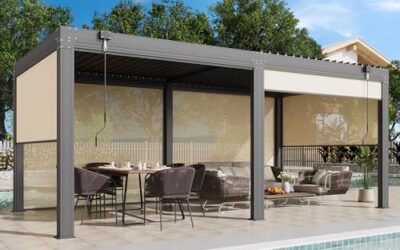
The Verona is the pick for patios that sit in a corner. Its 12 ft x 8 ft footprint fits into the angle where two fences or walls meet, and the bamboo privacy panels cover the two outer sides, which are exactly the sides a corner patio needs screened. The result is a sheltered nook that feels private without closing off the yard entirely.
Cedar is the frame material, and the listing states it clearly. The wood gives the cabana a warm tone that suits most gardens, and it weathers well with minimal care. The corner layout is the real advantage here: a standard rectangular pergola placed in a corner wastes the space behind it, while the Verona uses the corner as part of its design. Chairs and a small table tuck into the angle, and the open side faces the house or the lawn, keeping the seating area connected to the rest of the yard.
The bamboo privacy panels are what set this model apart from plain cedar kits. Bamboo reads as a natural material alongside cedar, so the panels look like they belong on the frame rather than being bolted on as an afterthought. They give solid coverage at seated height, which is where privacy matters most on a patio. The panels also break up wind, making the corner noticeably calmer on a breezy afternoon.
This is the pergola to choose when the yard is small or the patio is already shaped by fences on two sides. It needs a flat, level surface, and it should be anchored to that surface before use. Check the listing for the anchor hardware included with the kit, and confirm that the surface under the posts matches the anchor type. A corner patio on a concrete pad is the ideal setting; a deck works too, as long as the posts can be bolted through to solid framing below.
One point to keep in mind is the footprint. Twelve feet by eight feet sounds generous, but the privacy panels and posts take up part of that space, so the usable interior is smaller than the headline dimensions suggest. Measure the seating set that will live under the roof and compare it with the interior space, not the outside measurements. For two lounge chairs and a side table, the Verona has room to spare. For a full dining set, it will feel tight.
Specs
- Footprint: 12 ft x 8 ft
- Frame material: cedar wood
- Privacy screen: bamboo privacy panels
- Design: corner cabana layout
- Model number: 2002548
- UPC: 752113002548
Sunjoy Wooden Grill Gazebo 10 ft x 11 ft Cedar Frame BBQ Pergola
The Sunjoy grill gazebo is built around a different job: cooking outdoors. Its 10 ft x 11 ft cedar frame covers a grill and a serving area, and the privacy screen sits behind the grill, shielding the cook from the view beyond. Large bar shelves run along the sides, giving a place to set plates, tools and ingredients within arm’s reach of the grill.
The cedar frame is the foundation of the design. It is a grill gazebo, so the frame has to stand up to heat, smoke and grease, and cedar handles that environment better than softer woods. The privacy screen is part of the frame, not a curtain hung afterward, so it stays put in wind and does not flap against the grill. The bar shelves are a practical touch that turns the gazebo into a working outdoor kitchen rather than just a roof over a grill.
Size is generous for its purpose. Ten feet by eleven feet leaves room for a full-size grill, a serving counter and a person moving between them. The listing describes the gazebo for backyard and hot tub use as well, which makes it a flexible choice for a yard where the grill area and the spa sit near each other. The same privacy screen that shields the grill also gives the hot tub area a measure of seclusion.
Placement needs care with this model. A grill gazebo should sit on a flat, non-flammable surface with clear space around the grill, and the frame must be anchored so wind cannot shift it. Keep the grill itself away from the posts and the privacy screen, and leave a path for carrying food to and from the house. The bar shelves help here: they keep ingredients and tools at the grill instead of on a table inside the house, which cuts down on trips back and forth.
This is the pick for a household that grills often and wants the cooking area to feel like a room of its own. The privacy screen and the bar shelves together create a defined space, and the cedar frame gives it a look that fits a backyard rather than a commercial kitchen. It is also the better choice of the two picks when the yard is open on all sides, because the screen can be positioned toward the neighbor or street that needs blocking, while the open sides keep the cooking area airy.
Specs
- Footprint: 10 ft x 11 ft
- Frame material: cedar frame
- Privacy screen: built-in privacy screen
- Bar shelves: large bar shelves included
- Use: backyard grill gazebo and hot tub area
- Model number: A106008500
Frequently Asked Questions
Does a wood pergola with a privacy screen need a permit?
It depends on the local rules where the pergola will stand. Many towns treat a freestanding pergola under a certain size as a garden structure that needs no permit, while larger or attached structures may need one. Check with the local building office before ordering, and bring the footprint dimensions and the height from the listing. A quick call avoids the cost of moving a finished structure.
How much shade does a pergola with a privacy screen give?
A pergola roof made of slats gives partial shade that moves with the sun, while a solid roof section gives full shade under that part of the roof. The privacy screen adds shade on the side it covers, especially in the late afternoon when the sun is low. For the most shade, position the screen on the side facing the afternoon sun. A canopy can be added over the slats for more coverage, but check that the frame is rated for the extra weight and wind load.
Can the privacy screen be added to a pergola that does not have one?
It is possible, but a screen designed as part of the kit will fit better and hold up longer than a screen added afterward. The two pergolas in this guide include the screen in the frame, which means the posts and beams are sized for it. Adding a heavy screen to a frame that was not built for one can overload the posts in wind. If an existing pergola needs more privacy, a freestanding screen placed beside it is a safer option than bolting panels onto the frame.
How do I keep a cedar pergola looking good?
Wash the frame with mild soap and water once or twice a year, and let it dry fully before applying stain or sealer. A clear sealer keeps the cedar tone, while a tinted stain can match the frame to a deck or fence. Reapply when water stops beading on the surface, usually every year or two depending on sun exposure. Leave the wood unstained if a silver gray finish is preferred; cedar weathers evenly and the color change is part of its character.
A wood pergola with a privacy screen turns an open patio into a room with a roof and walls that still lets the breeze through. Choose the Verona for a corner patio that needs its two outer sides screened, or choose the Sunjoy grill gazebo for a cooking area that needs a screen behind the grill and shelves within reach. Either way, measure first, anchor the frame well, and the patio will feel private for years.

Write Your Review
No reviews yet. Be the first to share your experience!