
Key takeaways
- The best push gas mowers for suburban lawns: three 21-inch models with easy-start engines, mulching and bagging options, and quick, simple height adjustment.
What's inside
As an Amazon Associate I earn from qualifying purchases. This post may contain affiliate links at no extra cost to you.
Disclosure: As an Amazon Associate, we may earn from qualifying purchases made through links on this page, at no additional cost to you.

Best Push Gas Mowers for Suburban Lawns
A suburban lawn asks a lot from a mower without asking for much mower. The typical lot is a quarter acre or less of fescue, bluegrass or Bermuda, broken up by a driveway, a fence line, flower beds and a couple of trees. The machine has to squeeze through a side gate, turn tightly around landscaping, and then disappear into a garage corner next to the car. It also has to be civilized about it: a push gas mower that starts on the first or second pull, cuts at a consistent height, and handles clippings the way you prefer is worth far more on a Saturday morning than raw horsepower you will never use.
That is exactly the brief the three mowers in this guide were chosen against. Every model here is a true push mower — no self-propelled drive adding weight, cost and another system to maintain — and every one runs a four-cycle gasoline engine on a 21-inch steel deck, the size that covers open suburban turf quickly while still fitting through a standard gate. All three give you quick height adjustment and at least two ways to handle clippings, and all three are built around easy starting, because a mower that fights you at the pull cord is a mower that gets skipped on busy weekends.
The differences are in the details that matter week to week: engine size and torque for thick spring growth, single-lever versus dual-lever height changes, how large the grass bag is, and how small the mower folds down for garage storage. Read the picks below against your own lot — flat or sloped, bagger or mulcher, tight garage or open shed — and the right one usually identifies itself.
Quick Picks
- Best overall: YARDMAX 21-Inch 170cc 3-in-1 (YG1650) — the strongest engine here, a full mulch/bag/side-discharge deck, single-lever height changes and high rear wheels with ball bearings.
- Best for tight garage storage: PowerSmart 21-Inch 144cc 2-in-1 (DV8621P) — a folding handle that shrinks the storage footprint, auto choke starting and a straightforward mulch-or-bag setup.
- Best for bagging: SENIX 21-Inch 144cc 3-in-1 (LSPG-M14) — a large 1.7-bushel rear bag, oil pre-filled from the factory and three clipping options.
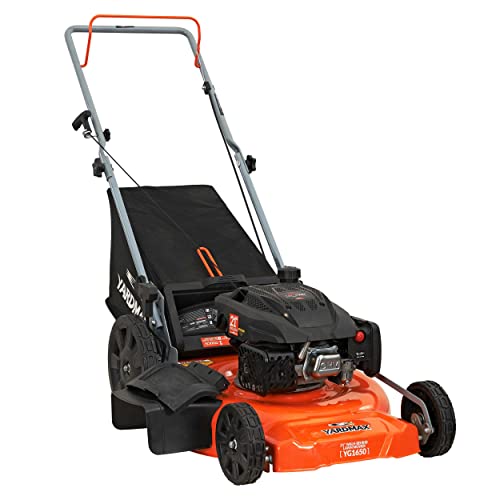
YARDMAX 21-Inch 170cc 3-in-1 Gas Push Lawn Mower (YG1650) (ASIN: B08P3M694L)
The YG1650 is built around YARDMAX’s own 170cc overhead-valve engine, rated at 6.5 ft-lb of torque — the largest displacement and strongest torque figure in this guide. That reserve matters on a suburban lawn more often than people expect: the first cut of spring, a week of rain that pushes fescue past its ideal height, or a damp patch under a shade tree all load the blade in ways a smaller engine feels immediately. Power is delivered through a recoil starter, and the engine runs on straight gasoline with a separate 0.21-gallon fuel tank and a 16.9-ounce oil capacity using SAE 10W-30, with oil included in the box.
The 21-inch deck is stamped from 16-gauge steel and uses the brand’s MAXFlow deck shaping to keep air and clippings moving, which supports all three discharge modes: rear bagging into a 1.88-bushel collector, mulching, or side discharge for tall growth. Height changes are handled by a single lever working through seven positions, so a full deck-height change takes seconds at the curb rather than a walk around the machine. High rear wheels roll over the lumpy transitions between lawn, sidewalk and driveway apron, and every wheel runs on double ball bearings with wide 1.5-inch treads, which keeps pushing effort low and the cut even. At 60 pounds it is a mid-weight push mower, sized by the maker for quarter- to half-acre yards, and it carries a two-year limited warranty.
Highlights
– 170cc engine with 6.5 ft-lb of torque — the most reserve power in this guide
– True 3-in-1 deck: bag, mulch or side discharge
– Single-lever, seven-position height adjustment
– High rear wheels with double ball bearings on all four corners
– 16-gauge stamped steel deck and a 1.88-bushel rear bag
Considerations
– Push-only drive: on a sloped lot you supply all the effort
– Recoil start only — no electric start option
– Heavier than the smallest push mowers when lifting onto a storage shelf
PowerSmart 21-Inch 144cc 2-in-1 Gas Push Mower (DV8621P) (ASIN: B0CB9XSR1S)
PowerSmart’s entry pairs a 144cc four-cycle OHV engine with a recoil starter and an auto choke, so starting is a simple pull with no primer bulb routine and no choke lever to manage — a small thing that adds up over a season of weekly cuts. The engine is a straightforward, fuel-sipping design with a 0.21-gallon tank, and the listing specifies SAE 10W-30 oil, which is included. At 61.6 pounds with a compact, lightweight frame, this is an easy mower to walk around beds and borders, and the maker rates it for flat lawns up to a quarter acre — the classic suburban footprint.
The 21-inch, 16-gauge steel deck is a 2-in-1 design that mulches or rear-bags, and the heavy-duty blade is shaped to keep clippings circulating for a finer mulch. Cutting height adjusts with dual levers through six positions spanning 1.5 to 3.9 inches, a range that reaches high enough for tall fescue in summer heat. Wheels are 7 inches in front and 10 inches at the rear. The storage story is the standout: the handle folds so the mower takes up a fraction of its working footprint, standing compactly against a garage wall — a genuine advantage in the single-car suburban garage where floor space is contested by cars, bikes and bins.
Highlights
– Auto choke and recoil starter for simple, no-fuss starting
– Folding handle design for compact garage storage
– Six cutting heights from 1.5 to 3.9 inches suit tall summer fescue
– 16-gauge steel deck with mulching and rear bagging
– Oil included in the box
Considerations
– 2-in-1 only: there is no side discharge mode for overgrown grass
– Dual-lever height adjustment is slower than a single-lever setup
– Best suited to flat lawns; the maker recommends it for level terrain
SENIX 21-Inch 144cc 3-in-1 Gas Push Mower (LSPG-M14) (ASIN: B0GPY1K2WC)
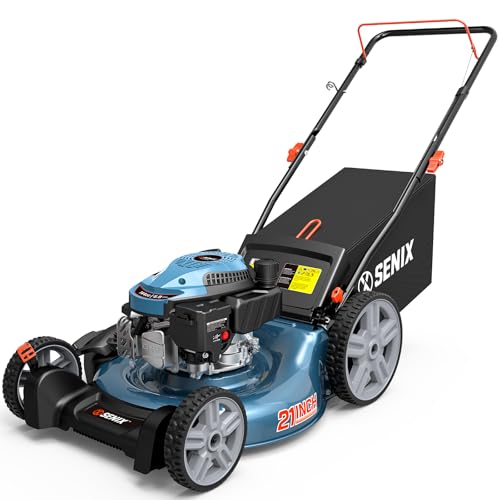
The LSPG-M14 runs a 144cc four-cycle OHV engine rated at 3.4 horsepower and 5.8 ft-lb of torque, and it arrives with its oil pre-filled, which removes the easiest first-day mistake from the setup process entirely. The engine is tuned for economy as much as output, with listed fuel use of about 27 ounces per hour, so a typical suburban session runs comfortably on a single tank. Recoil starting and a manual push layout keep the machine simple: no drive cables, no battery, nothing extra to service.
Underneath, the 21-inch steel deck uses a vortex tunnel shape intended to resist clipping buildup, and it works as a full 3-in-1 system — a 1.7-bushel rear bag for a clean finish and leaf pickup in fall, a mulch plug for weekly maintenance cuts, and a side discharge chute for when the grass gets ahead of you. Six cutting positions run from 1.25 to 3.75 inches on a dual-lever adjustment, covering everything from a low spring scalp on warm-season grass to a high summer cut. The wheel set pairs 8-inch front wheels with 11-inch rears for easier rolling over uneven turf and sprinkler heads. SENIX backs the mower with a two-year limited warranty.
Highlights
– Ships with oil pre-filled — one less setup step and no first-fill mistakes
– Full 3-in-1 system with a generous 1.7-bushel rear bag
– 5.8 ft-lb of torque from an economical 144cc engine
– 11-inch rear wheels roll easily over bumps and uneven strips
– Two-year limited warranty
Considerations
– Dual-lever height adjustment takes a moment longer than single-lever designs
– Push-only layout is best kept to flat or gently sloped lots
– Bag capacity is large, but it fills fast in heavy spring growth
How to Choose
Start with your lot, not with the spec sheet. Measure or pace off your actual turf area: most suburban lawns fall between a tenth and a third of an acre once the house, driveway and beds are subtracted, and every mower in this guide is sized for exactly that band. A 21-inch deck is the sweet spot — wide enough to finish a quarter acre in reasonable time, narrow enough to pass through gates and between shrubs without a wrestling match.
Engine size comes next. A 144cc engine handles maintained lawns cut on a weekly rhythm without drama. Choose the 170cc class if your grass regularly gets long between cuts, if you mulch thick spring growth, or if your lot includes a slope where the blade and the climb compete for the same effort — remembering that on a push mower, the engine only turns the blade; your legs still do the walking. Torque figures tell you more than displacement alone: higher torque is what keeps blade speed up when the deck loads with wet clippings.
Decide how you will handle clippings before you buy. Mulching returns finely chopped grass to the lawn and saves the most time, but it asks for frequent cuts. Bagging gives the cleanest finish and doubles as leaf cleanup in autumn, at the cost of emptying stops — bag capacity in bushels is worth comparing. Side discharge is the pressure valve for overgrown grass and is the one mode the PowerSmart above does without, so be honest about how often your lawn gets ahead of you.
Finally, think about the 50 weeks a year the mower is not cutting. A folding handle, like the PowerSmart’s, can be the difference between a mower that lives in the garage and one that lives under a tarp. Check the stored dimensions against your actual space, and factor in routine care: four-cycle engines want an oil check before each use, fresh fuel through the season, and stabilized fuel or a drained tank before winter.
Key Specifications Explained
Displacement and torque. Displacement (cc) is engine size; torque (ft-lb) is the twisting force that keeps the blade spinning under load. For push mowers on suburban turf, 140–170cc with torque around six ft-lb is the working range — enough for thick grass without the weight of a commercial engine.
Deck width and material. All three decks here cut 21 inches and are stamped steel; the PowerSmart and YARDMAX specify 16-gauge steel, a heavier, dent-resistant grade than the thin decks on bargain machines. Width sets your pass count, while deck shape influences how well clippings circulate for mulching.
Height adjustment style and range. Single-lever systems change all four wheels at once and are the fastest to use; dual-lever systems adjust the front and rear axles separately and are simple and durable. Ranges here run roughly from 1.25 to 3.9 inches. Match the top of the range to your grass: tall fescue wants a high summer cut, while Bermuda can be kept lower.
Wheels and bearings. Larger rear wheels — 10 or 11 inches on these mowers — roll over bumps, roots and driveway edges with less effort. Ball-bearing wheels, as on the YARDMAX, spin more freely and last longer than plain bushings, which you feel most at the end of a long mow.
Bag capacity. Measured in bushels or gallons, this is how much clipping volume you carry before emptying. The 1.7- to 1.88-bushel bags here are generous for the class; bigger bags mean fewer stops but a heavier load to push as they fill.
Fuel and oil. Four-cycle engines burn straight gasoline and keep oil in a separate crankcase — no mixing. Tank sizes around 0.21 gallons suit quarter-acre sessions. Note whether oil is included or pre-filled, as on the SENIX, and which grade the maker specifies.
Setup and Use Tips
Unbox on a flat surface and check the fasteners on the handle and wheels before the first start. If your mower ships with oil in a bottle rather than in the crankcase, fill it slowly and check the dipstick on level ground — overfilling causes smoking and hard starting. Add fresh gasoline from a clean can, and consider a fuel stabilizer if the fuel will sit for more than a month.
Set your cutting height before the first pass and follow the one-third rule: never remove more than a third of the grass blade in a single cut. If the lawn has gotten away from you, take it down in two passes a few days apart rather than scalping it in one. Mulch when the grass is dry and you are cutting on schedule; switch to the bag for leaf season, wet grass or when you spot weed seed heads you do not want redistributed.
Walk at a steady, unhurried pace and overlap each pass by a couple of inches for an even finish. Keep the blade sharp — a dull blade tears grass and leaves brown tips — and rinse or scrape the underside of the deck after wet cuts so clippings do not cake and block the discharge path. Before storing the mower, let the engine cool, brush off the deck, and keep it somewhere dry and ventilated, away from pilot lights and sparks. Hearing protection is a sensible habit with any gasoline mower, and eye protection is cheap insurance against thrown debris.
Common Mistakes to Avoid
- Cutting too low. Scalping stresses suburban turf, invites weeds and exposes soil. Raise the deck, especially in summer heat.
- Mowing wet grass with the mulch plug in. Wet clippings clump, clog the deck and smother the lawn. Wait for the grass to dry, or bag instead.
- Skipping the oil check. Four-cycle engines can be ruined by running low on oil. Ten seconds with the dipstick before each mow is the cheapest maintenance there is.
- Leaving fuel to age. Stale gasoline is the leading cause of hard starting. Use fresh fuel, stabilize what you store, and run the carburetor dry before winter storage if the maker recommends it.
- Ignoring the slope. A push mower gives you no drive assistance. On steeper suburban side yards, mow across the slope rather than up and down, and keep firm footing.
- Forgetting the underside. A deck packed with old clippings cuts poorly and rusts faster. A quick scrape after mowing keeps airflow — and cut quality — where it should be.
FAQ
Is a push mower enough for a quarter-acre suburban lawn?
Yes. A 21-inch push mower is the traditional match for lots up to about a quarter acre of actual turf, and all three models here are rated for that size or beyond. Self-propelled drive becomes worth considering mainly on larger lots or sustained slopes.
Which is better for my lawn: mulching or bagging?
Mulching for routine weekly cuts — it returns nutrients and saves time. Bagging when the grass is long, wet, full of leaves, or carrying weed seeds. A 3-in-1 mower lets you switch by the day, which is why two of the three picks here include all three modes.
How loud is a gas push mower, and when should I mow?
Gasoline mowers are noticeably louder than battery models, so be a good neighbor: mow at reasonable hours, mid-morning or late afternoon, and wear hearing protection during longer sessions. Keep the muffler and engine maintained, since a neglected engine runs louder.
What maintenance does a four-cycle push mower need?
Check the oil before each use, change it on the maker’s schedule, clean or replace the air filter, keep the blade sharp and balanced, and manage fuel freshness. None of it is difficult, and it is the main ongoing difference from owning a battery mower.
Can these mowers handle a sloped yard?
They can handle gentle slopes, with the larger rear wheels helping stability and roll. You provide all the forward effort, though, so a steep or long slope is hard work — mow across the slope, take your time, and consider whether a self-propelled model would suit the lot better.
Final Verdict
For most suburban lawns, the YARDMAX YG1650 is the pick: its 170cc engine and full 3-in-1 deck handle the widest range of real-world conditions, and the single-lever height adjustment and ball-bearing wheels make weekly mowing feel easy rather than endured. If your garage is tight and your lawn is flat and modest, the PowerSmart DV8621P trades the side discharge mode for a folding handle and the simplest starting routine of the three. And if you bag more than you mulch, the SENIX LSPG-M14 pairs a big rear bag with factory-filled oil and honest, economical running. All three are push gas mowers in the classic mold — no cords, no charging, no drive system to service — sized and specified for the way suburban lawns are actually mowed.
Related guides
More from Amazon
Programs that pair well with the guide above. Offers and eligibility are set by Amazon and may change.
Free shipping on eligible items, Prime Video and more. Eligible new members can start with a free trial.
Start a Prime free trialAudiobooks and podcasts to listen to on the go. Eligible new members can start with a free trial.
Try Audible freeAd-free music streaming. Eligible new subscribers can start with a free trial.
Try Music Unlimited freeA free business account with business pricing and bulk-buying tools for work, shop or home office.
Create a business accountAs an Amazon Associate we earn from qualifying purchases.


Write Your Review
No reviews yet. Be the first to share your experience!